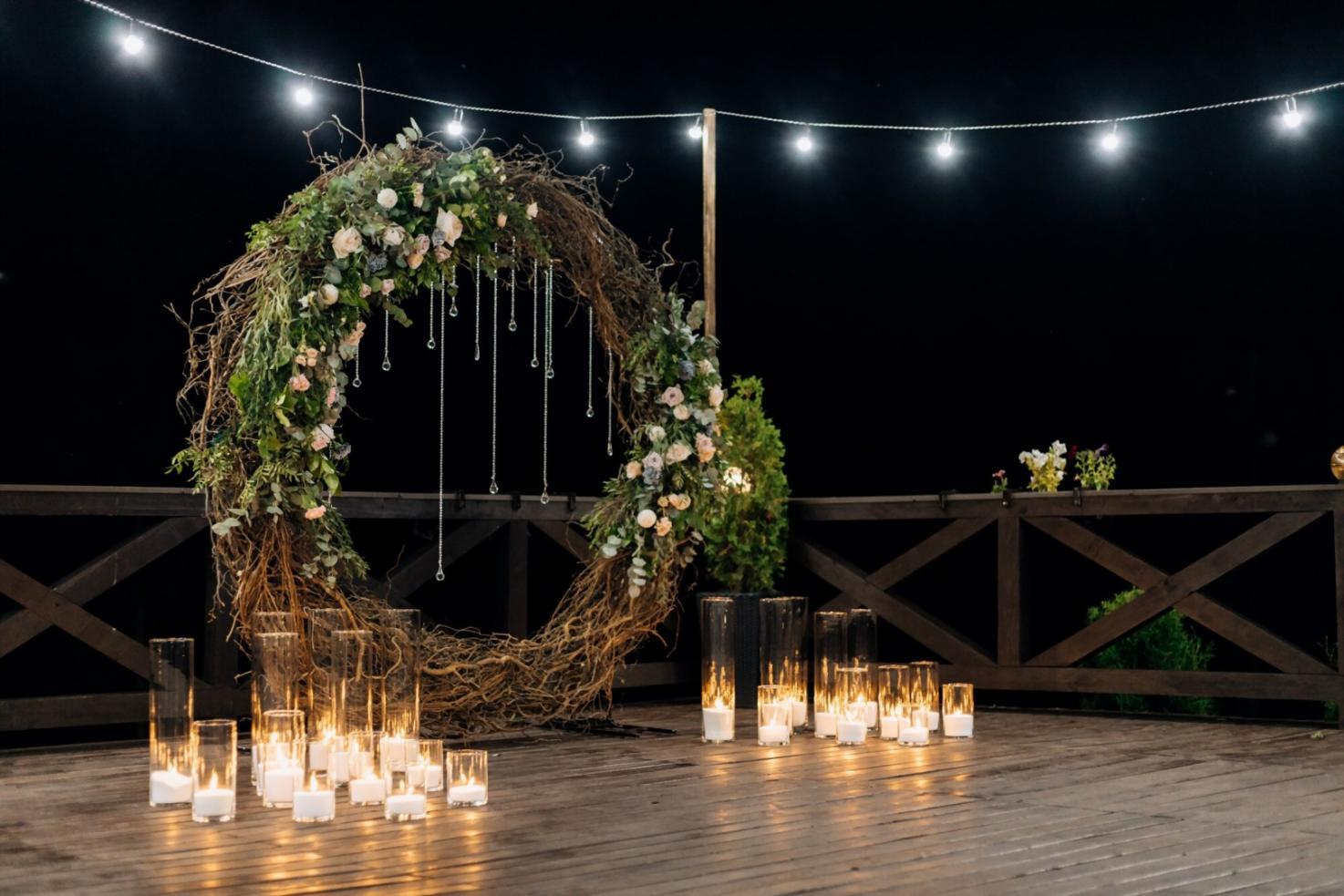

Where flowers become the event.
Lendruk teaches event floristry as a craft with real stakes — weddings, ceremonies, and installations where scale and timing leave no room for guesswork.
See the programI'd been arranging flowers at home for years but never thought I could work professionally. The module on floral installations for venues specifically — that's what gave me enough confidence to take the first booking.
Oksana Bilyk — Lviv
The sourcing content alone was worth it. I didn't know how to negotiate seasonal substitutions with vendors when client flowers weren't available. After the program I started managing five different suppliers without the panic.
Taras Fedorenko — Kyiv

Hobbyist to florist is not one step — it's several specific ones.
Most people who come to Lendruk already know how to handle flowers. What they're missing is the logic behind event-scale work: how to calculate quantity for 400 table centrepieces, how to build a timeline that accounts for delivery, conditioning, and setup in sequence.
That gap doesn't close by watching videos passively. It closes by working through scenarios that match real conditions — tight venues, last-minute substitutions, clients who change the brief on Thursday for a Saturday event.
What the floristry community references.
Lendruk has been built with input from working event florists across Ukraine since 2025. The curriculum reflects what practitioners actually find difficult — not what looks good on a course outline.

Curriculum built from practice
Every module was reviewed by florists who work active event calendars — the content reflects real constraints, not textbook scenarios.
Rivne regional education partner
Lendruk operates as part of Rivne's local educational ecosystem, aligned with regional standards for professional development in applied arts.
Recognised completion certificate
Graduates receive documentation they can present to event venues and wedding coordinators — useful when building a client-facing portfolio from scratch.
Based in Rivne, the program is open to participants outside Ukraine. Deadlines, payment and delivery logistics for students joining from abroad are covered in detail on a separate page.
Information for international studentsA practical picture of where this leads.
Finishing the program doesn't guarantee bookings — that depends on your market, your prices, and your effort. What it does give you is enough grounding to operate without guessing.
Most graduates describe the same shift: they stop second-guessing their work mid-setup. They know why a composition works or doesn't, they can explain it to a client, and they can fix it under pressure.
- You can quote a full event independently — flowers, labour, travel, contingency — without relying on a mentor to check the numbers.
- You have a portfolio of documented work built during the program, ready to share with potential clients or venues immediately.
- You understand seasonal availability well enough to design around shortages, not be derailed by them.
- You can take a brief from a client, translate it into a sourcing list, and deliver a coherent result — at table scale and at arch scale.